
On this page
Why gutters sag
- Spikes and ferrules. Older systems hung with long spikes through the gutter face work loose over years.
- Wide hanger spacing. Hangers too far apart let the gutter bow under load.
- Soft fascia. Wood that has been wet for years will not hold a screw.
- Weight. Wet pine straw and standing water add a lot of load.
- Storms. Wind and falling limbs bend gutters and pull hangers.
Storms are a big factor here. The NWS Wilmington climate overview records 73 tropical cyclones producing gusts of at least 39 mph at the official station between 1871 and 2021. Every one of those works on the fasteners.
How it is fixed
- Clean the gutter so the true shape and weight are clear.
- Check the fascia behind the sag; replace soft wood.
- Set the correct slope toward the outlet with a level or string line.
- Fasten with hidden hangers screwed into solid wood at close spacing.
- Water-test to confirm it drains.
When sagging means replacement
If the gutter itself is creased or bent along its length, sags in many places, or was undersized and overflowing anyway, replacing the run often makes more sense than re-hanging it. See gutter replacement.
Prevent it
- Keep gutters clean so they are not carrying wet debris
- Have hangers checked before hurricane season
- Fix overflow quickly so the fascia stays dry
Spikes vs hidden hangers
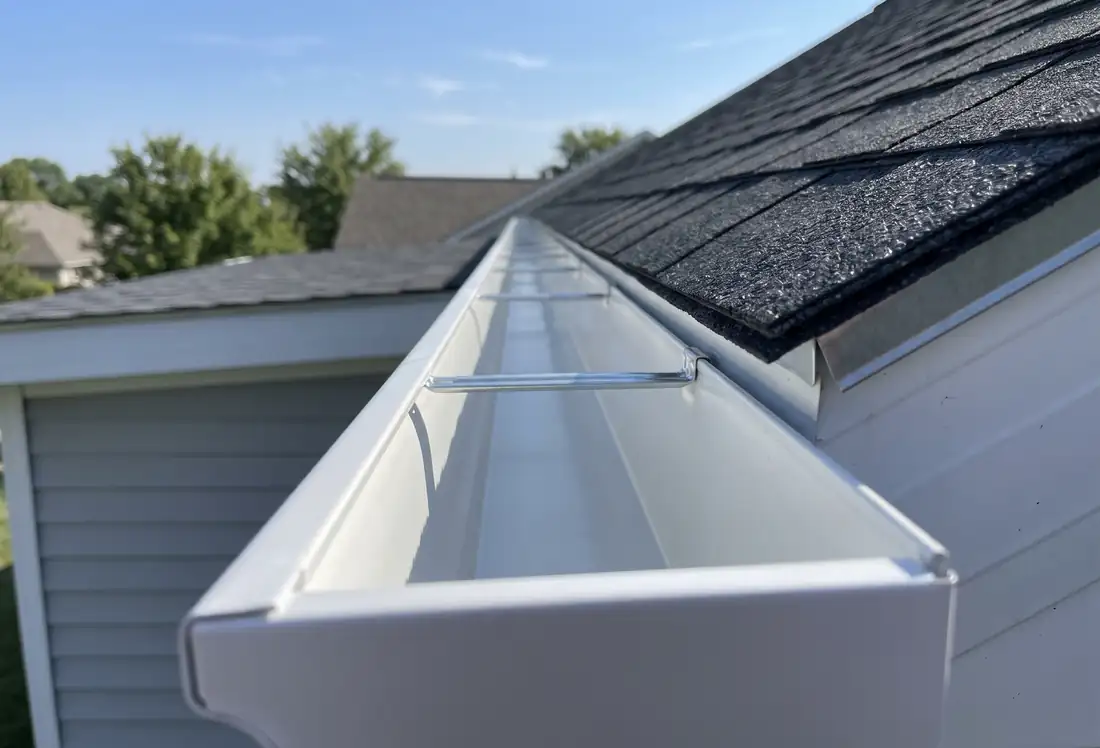
Many older gutters around Wilmington were hung with spike and ferrule: a long nail through the front of the gutter, through a sleeve, into the fascia. Each time the wood swells and shrinks, the spike loosens. Hidden hangers clip inside the gutter and fasten with a screw, which holds far better. Swapping spikes for hangers is a common, inexpensive repair that stops sagging for years.
Signs of a sag before you see it
- Water pooling in the gutter after rain stops
- Overflow at the middle of a run rather than the ends
- Gaps between the gutter and the fascia
- Drips behind the gutter onto the wall
Sagging and fascia rot
Sagging and rot feed each other. A sagging gutter holds water and overflows behind itself, wetting the fascia; soft fascia lets hangers loosen, deepening the sag. Breaking the cycle means replacing the soft wood, not just adding more screws. See fascia and soffit.
Cost factors
- Length of the sagging run
- Number of new hangers
- Amount of fascia to replace
- Height and access
- Whether the gutter can be reused or is bent
Repair vs replace
A sag in one run on sound wood is a repair: re-hang it to the right slope. Gutters sagging all around the house, often a sign of spikes and old wood, may be better replaced, with the fascia repaired in the same job.
Sagging gutter questions
What is the right slope for a gutter?
Gutters need a gentle, consistent fall toward each outlet so water drains instead of standing. Installers set it with a string line or level. Too little slope leaves standing water; too much looks wrong and can send water past the outlet.
What are spike and ferrule hangers?
A long nail (spike) driven through the front of the gutter and a tube (ferrule) inside it, into the fascia. They were common on older systems and loosen as wood moves, which is a frequent cause of sagging.
How far apart should gutter hangers be?
Closer than many builder installations use. Coastal contractors typically space hidden hangers more tightly than inland practice, adding extras at corners, ends and outlets. Ask your contractor what spacing they use and why.
Can gutters sag because of rotten fascia?
Yes. If the board behind the gutter is soft, screws pull out under load. The wood must be replaced before the gutter is rehung.
Signs of sagging to look for from the ground
- A wavy line along the bottom edge of the gutter
- Gaps between the back of the gutter and the fascia
- Water pooling in the gutter after rain stops
- Overflow from the middle of a run
- Stains on the siding below a low spot
What to ask
- What hangers will you use, and at what spacing?
- Is the fascia sound behind this section?
- Will you correct the slope?